We’re proud to be consultants. But let’s be honest: not all consultants make it easy to be proud.
We’ve seen too many focus on flashy presentations, jargon and upselling the next project instead of delivering real value. That’s not how we work. Good consulting means challenging thinking, tailoring the approach and staying accountable for results.
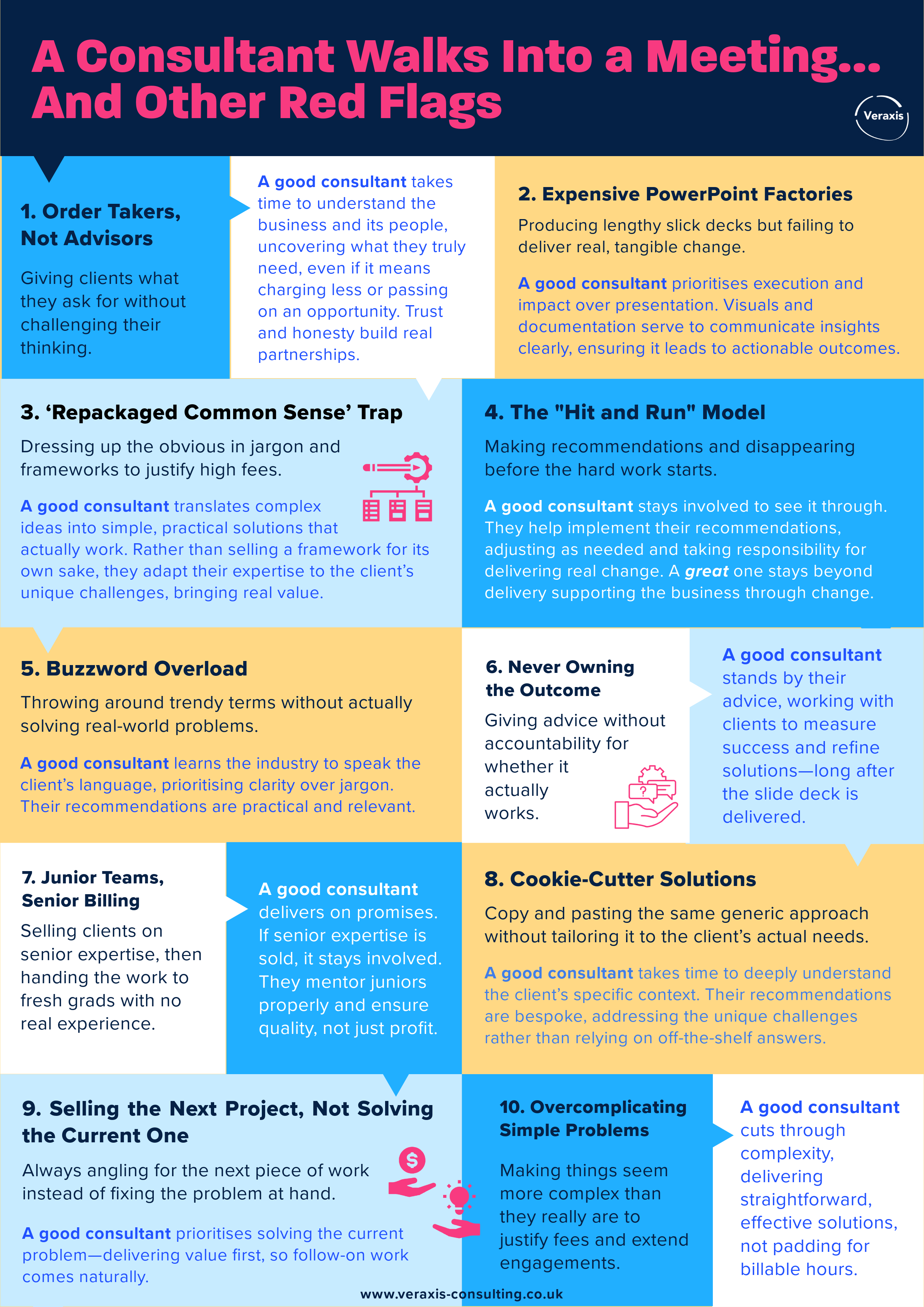
Here are ten red flags that give consultants a bad name. For each one, here’s what good looks like instead.
Read the text version
1. Order takers, not advisers
Giving clients what they ask for without challenging their thinking.
What good looks like: taking time to understand the business and its people to uncover what they really need, even if that means charging less or passing on work. Trust and honesty build real partnerships.
2. Expensive PowerPoint factories
Producing long, slick decks that never turn into real change.
What good looks like: putting delivery and impact ahead of presentation. Visuals and documents exist to make insight clear, so it turns into action.
3. Repackaged common sense
Dressing up the obvious in jargon and frameworks to justify high fees.
What good looks like: turning complex ideas into simple, practical solutions that work. Instead of selling a framework for its own sake, a good consultant adapts their expertise to the client’s challenges.
4. Hit and run
Making recommendations and disappearing before the hard work starts.
What good looks like: staying to see it through. That means helping put the recommendations in place, adjusting as needed and taking responsibility for real change. A great consultant stays beyond delivery, supporting the business through the change.
5. Buzzword overload
Throwing around trendy terms without solving real problems.
What good looks like: learning the industry well enough to speak the client’s language. Clarity over jargon, with recommendations that are practical and relevant.
6. Never owning the outcome
Giving advice with no accountability for whether it works.
What good looks like: standing by the advice. Working with clients to measure success and refine the solution long after the slide deck is delivered.
7. Junior teams, senior billing
Selling senior expertise, then handing the work to graduates with no real experience.
What good looks like: delivering on the promise. If senior expertise is sold, it stays involved. Juniors get proper mentoring and quality comes before profit.
8. Cookie-cutter solutions
Copying and pasting the same generic approach without tailoring it to what the client needs.
What good looks like: understanding the client’s specific context, then making recommendations that fit their challenges rather than relying on off-the-shelf answers.
9. Selling the next project, not solving this one
Always angling for the next piece of work instead of fixing the problem in front of you.
What good looks like: solving the current problem first. Deliver value and follow-on work comes naturally.
10. Overcomplicating simple problems
Making things look more complex than they are to justify fees and stretch the engagement.
What good looks like: cutting through complexity with straightforward solutions that work, not padding for billable hours.
If you’ve seen any of these from a consultant, you’re not alone. If you ever see them from us, tell us.